Auntsfield Estate:

Marlborough’s first and oldest vineyard


Marlborough is now the largest wine region of New Zealand and has become a world-renowned producer of premium wines in a relatively short time.

Hidden in the heart of this youthful Marlborough grape country, there is a small wine cellar, set in the side of a hill.

Nothing unusual in that you may think. There are now a few cellars around the province. However this cellar has something no other does.

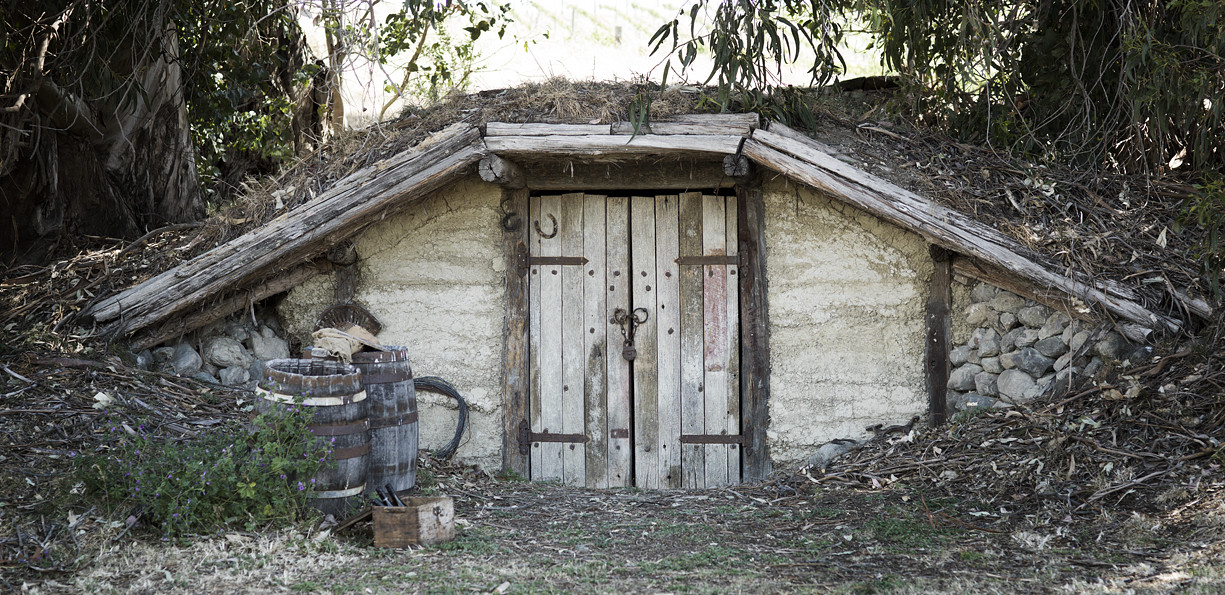
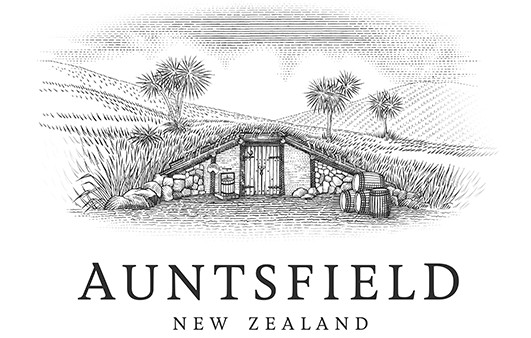
With four massive gum trees standing sentinel, the rammed earth cellar, with dirt floor and Manuka log roof, is an impressive reminder that winemaking in Marlborough does in fact have a proud past.

This cellar was the first of its kind to be built in Marlborough in 1873. It was another 100 years before the first of the new era vines where planted in the region.

Sited at Auntsfield Vineyard, the old cellar has been lovingly restored to its historical glory. For current owners, the Cowley family, the cellar is the first in a long journey to restore a very special part of this region's history.

A proud history stretching back 165 years

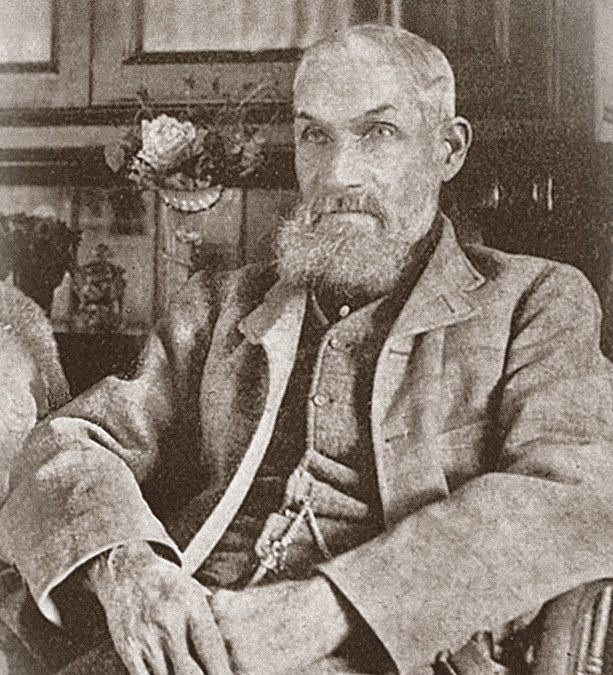
The story of Auntsfield goes way back to 1842, when Rev Charles Saxton obtained the original land grant from The New Zealand Company.

He is likely to have had some serious help in gaining the rights, as his brother in law, was Joseph Somes, the Governor of The New Zealand Company. However, Saxton was never to set foot onto his Marlborough station.

He returned to England after his young wife died here in New Zealand. But he did have an impact on the region, as the officiating chaplain at the funeral service of the Wairau Affray victims.

As he was absent, Saxton's land was grazed as part of the extended boundaries of Meadowbank Station, owned at the time by Charles Empson and William Eyes.

Empson was known as an entrepreneur, and Eyes as a politician. Meadowbank was a massive station, which at the time stretched from the Awatere in the South, to the Wairau Valley in the North and the Taylor River to the Brancott.

Empson and Eye's days as station owners were to come to an end in 1866, when a massive drop in the price paid for wool, (doesn't that sound familiar?) saw both men having to sell to Doctor Ralph Richardson, who held their mortgage.

Richardson had arrived in New Zealand with a considerable fortune and a staff of 35! He had no need to farm the land himself, so he leased the property outright to Arthur Seymour, ironically a political rival of Eyes, who already owned Tyntesfield Station.

David Herd had been working Meadowbank for Empson and Eyes and when Seymour leased the station David Herd was engaged as manager, a role he performed for over 20 years.

David Herd establishes Marlborough's first vineyard

While manager of Meadowbank, Herd continued the practice of grazing the unoccupied land to the north which was productive and had ample fresh springwater and shelter. This land became the focus of his dream for a place of his own and he secured it from Charles Saxton, planted his vineyard and named it Auntsfield.

Just why Herd decided to plant grapes is not known, although as Graeme Cowley says, there was a strong need for the early settlers to find productive crops that were economic within the emerging colony. And it wasn't that unusual in its time. The Colonial handbook of that era shows an extensive chapter on growing grapes and making wine.

Little vineyards were springing up right throughout the country and Marlborough was no exception. Wine was required for social drinking, religious ceremonies and for, believe it or not, its positive medical benefits. Auntsfield's wines are recorded as being recommended by the medical fraternity of the time.

It is said that Charles Empson influenced and supported Herd’s decision to plant the vineyard. This is likely as Empson had always been an entrepreneur and at this time was a neighbor of Herd’s. Empson may have been an enthusiastic supporter of Herd planting the vineyard unfortunately however his death in 1875 prevented him sampling the success of the enterprise and tasting the first wines.

In 1879 David Herd bought the block of Saxton land, settled on the property and continued to make wine until his death in 1905.

His son-in-law Bill Paynter, took over the property and the winemaking duties, right through until 1931, when the vines were removed and the land used for other farming practices.

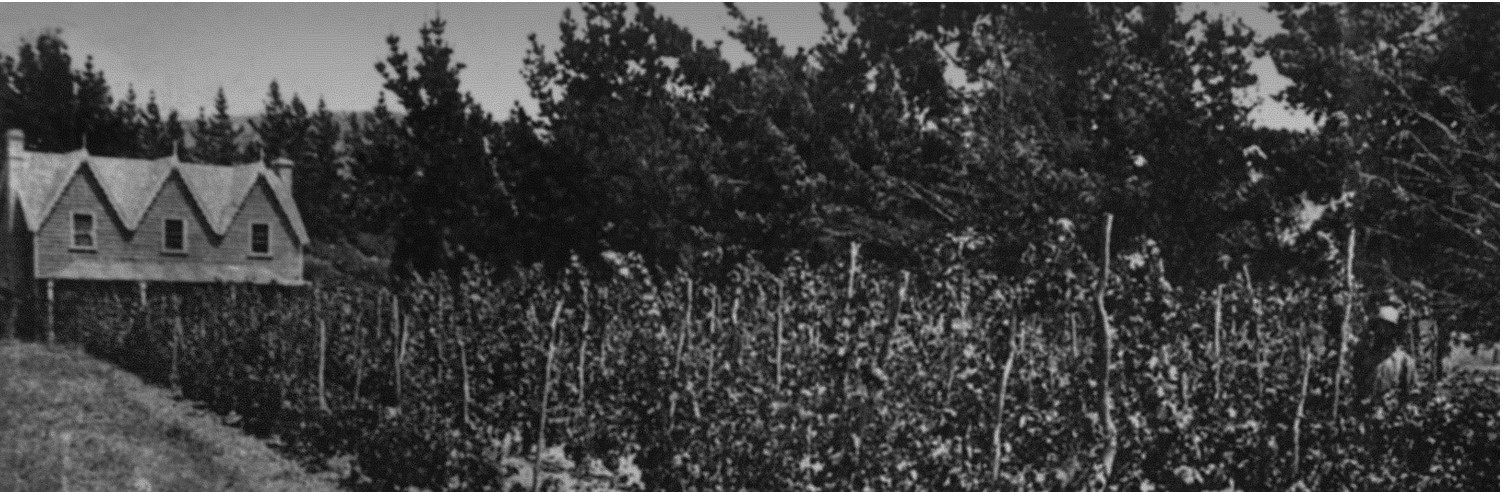
Those first grapes planted at Auntsfield are believed to have been a form of brown Muscat. Photos of the early vineyard, show the vines were trailed over loose wires, held up by tall Manuka polls.

Interestingly they were planted north to south, and with similar spacings to their modern counterparts. While Auntsfield was some 300 acres, the vineyard was less than an acre. Very small given today's large tracts devoted to grapes.

From intensive research, Graeme Cowley has been able to piece together a substantial amount of information about those early vintages.

Granddaughter Sarah Gleeson, who died in 2008 aged 100, visited the restored cellar shortly before her death. She had vivid memories of treading the grapes and helping in the making of the wine for her father when she was a young girl.

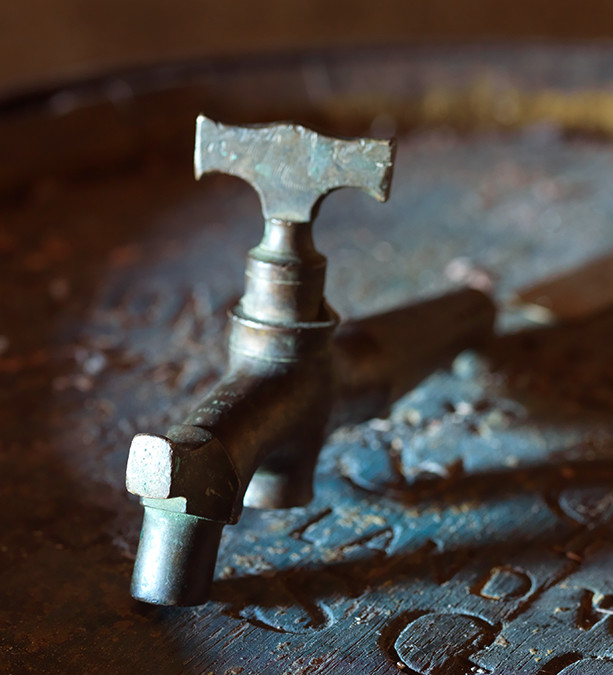
The cellar played an integral part in that production. It was here the wine was fermented and stored in oak brandy casks, before it was sold in two-gallon amounts. And it was nothing like the Sauvignon Blanc of today.

Sugar was used to help fermentation and was essential if the wine was to last without oxidising. This process helped to fortify the product, with the wine likely to have tasted more like a port, than a wine, as we know it.

Amazing stories abound

There are many amazing stories surrounding the history of Auntsfield. Such as the demise of the last cask of wine made by Bill Paynter. It had been hidden in a shearing shed, by his brother-in-law John Black.

Strong secrecy surrounded the whereabouts of this cask, and instructions left to the family, that it was only to be opened at Black's death. During shearing one morning, when the old man was ailing, his sons realised that all was extremely quiet at the shearing shed.

As the story is told, the sons opened the door to find all the shearers sleeping off a major hangover. Apparently they had uncovered the cask the day before and had been quick to party and consume every last drop. So after years of having lain hidden, the wine never got to be drunk at the old man's wake.

Perhaps it was more appropriate that workers of the land consumed the last of the Auntsfield wine during an opportunistic party. Although having said that, Graeme Cowley has discovered that there is still some Auntsfield wine in existence.

A bottle of 1905 wine remains with a family member, and according to Graeme who has seen and smelt it, it appears to still be drinkable. Well fortified, it more than resembles a fine old port. For the Cowley family who are busy redeveloping the Auntsfield property, the history that goes with it, is a major bonus.

The land found the Cowleys rather than the other way round

When Graeme and wife Linda first bought the property, there were no grapes anywhere around them. It wasn't until they began researching the history of the land, that they realised they had just purchased Marlborough's very first vineyard.

A grandson of Bill Paynter walked them round the property, pointing out where the vines used to be, explaining that the whare on site, was the original home for Herd and his growing family, (built in 1860 and still in good condition,) and even located the derelict cellar, which over the years had become a dumping site.

Careful and painstaking excavation uncovered the original walls and floor. Weeks of work saw the earthen walls rebuilt, lined with shingle to ensure drainage, and a new Manuka roof installed. For historic research buff Graeme, the vineyard's history is a dream come true.

He is now busy working with family members to ensure the slice of Marlborough's history is proudly restored. He has been tracking down all the information he can on the original owners and has spent hours talking to descendents of Herd, piecing together information about the winemaking, the grape growing and the property itself.

The original Auntsfield vineyard is soon to be replanted; with of the same grape variety Herd planted in 1873. Early Muscat grapes which for many years have languished in the historical collection have been identified and during the last four years have undergone intensive nurturing and propagation in the nursery prior to planting.

Auntsfield's next generation

For Graeme and Linda's sons Ben and Luc who are viticulturist and winemaker at Auntsfield, working a block of land with so much local history, provides a surreal experience.

As Ben says, “When I am out in the area of the old vineyard, or around the cellar, I can't help but think about how David Herd has walked here before me. Everywhere he trod, I now tred. Everything he experienced with weather and conditions, I now experience."

“I do wonder though, if he faced the same problems that we face today, when it comes to conditions and elements. I often think too about how similar and yet how different it would have been back then. The pruning would have been much the same, although of course where he used to get on the horse and plough, we move around in 4WD motorbikes or trucks."

“We talk about the ghost of David Herd a lot. I think he would have liked that we are continuing with what he started. Let's face it, if someone is sitting around talking about me in 100 years, the way we are talking about him, I'd feel pretty good about it."

The Auntsfield land covers 100 hectares, planted in Pinot Noir, Chardonnay and Sauvignon Blanc. Extensive native plantings have been undertaken throughout the property as the Cowley's endeavour to recreate an environment befitting of the original site.
© 2008 - 2013 Auntsfield Estate. Powered by Web Genius
Page: Historical Marlborough vineyard, Marlborough's original vinyard - Last Updated: 19th June, 2013 | Site Map